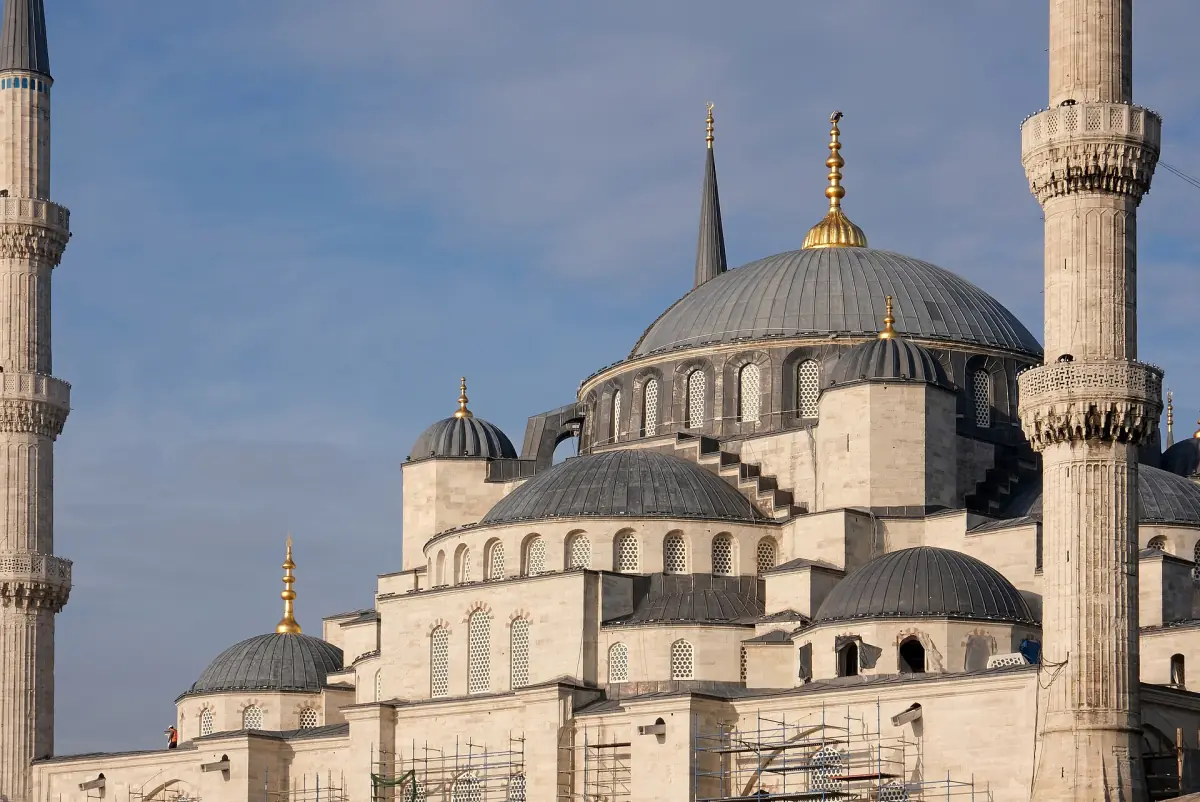
A courtyard mosque with a cascade of domes
The Sultan Ahmed Mosque, known as the Blue Mosque, follows the classical Ottoman plan: an arcaded courtyard in front and a prayer hall under one central dome. Smaller half-domes surround the main dome and step down towards the walls. From the outside, this gives the building its soft, layered skyline.
The architect was Sedefkâr Mehmed Ağa, a student of Sinan. Sinan himself did not build the Blue Mosque, and you can see his own work at the Süleymaniye Mosque. If you want the story behind the building, read the history of the Blue Mosque. If you prefer to see it with a guide, Istanbul old city tours pass the mosque and the square around it.
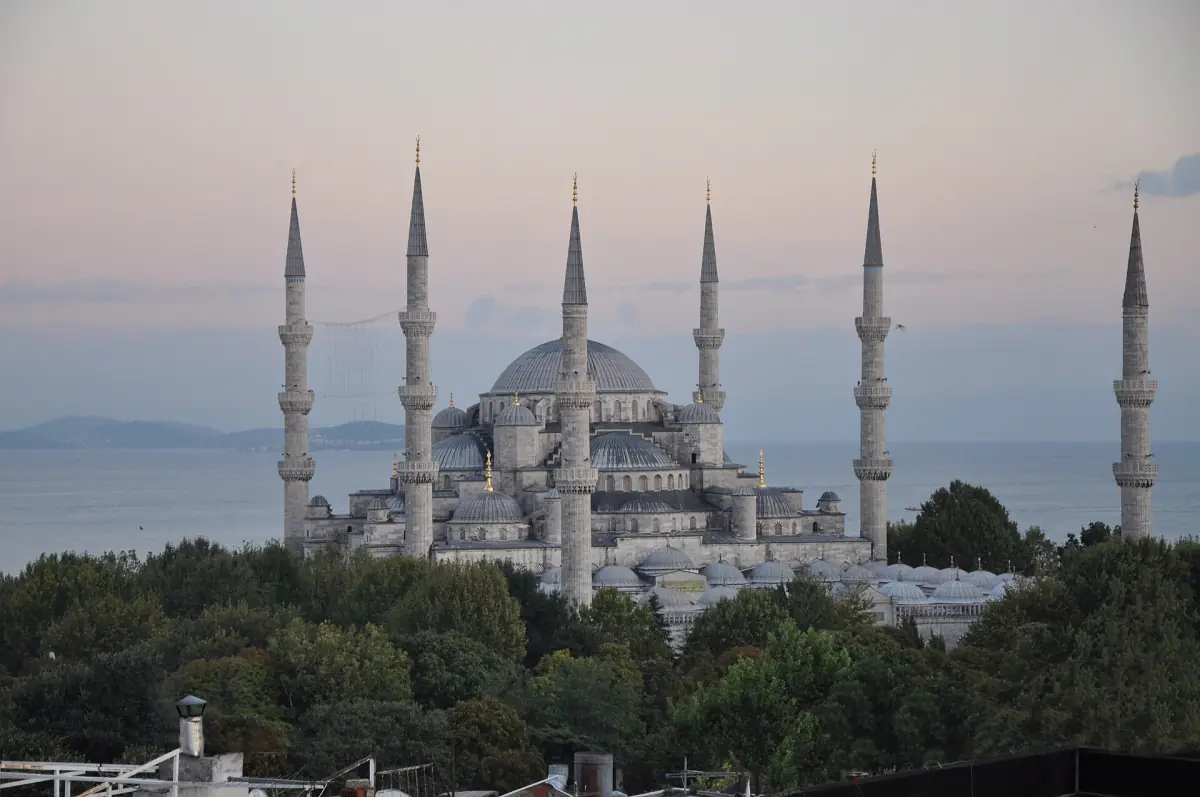
Our pick: three mosques on one walk
Seeing the Blue Mosque, Hagia Sophia and the Süleymaniye in one morning makes their differences easy to compare.
Hand-picked tours, booked through GetYourGuide. Prices are indicative starting prices in euros (as of October 2026). Tap a tour for live availability and the current price in your currency.
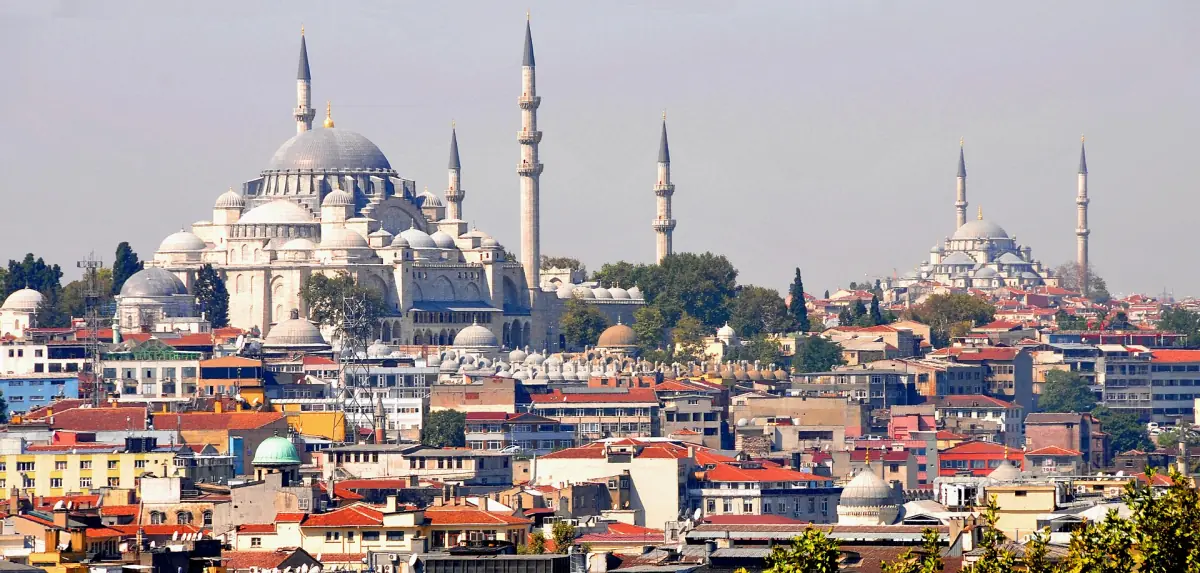
Old city tours past the Blue Mosque
Walking tours of Sultanahmet, with live prices and availability.
The figures at a glance
Where a measurement depends on how it is taken, both values are given.
| Feature | Figure | Note |
|---|---|---|
| Minarets | 6 | 4 on the main building, 2 at the courtyard |
| Main dome, height | 43 m | – |
| Main dome, diameter | 23.5 m or 33.4 m | Depending on how it is measured |
| Prayer house | 64 × 72 m | – |
| Windows | Over 200 | Up to 260, depending on how they are counted |
| Tiles | Over 20,000 | 21,043 by exact count, from İznik and Kütahya |
In short: about 43 m high, with more than 20,000 tiles and over 200 windows. The dome diameter is roughly 23 to 33 m, depending on how it is measured.
What to look at
Five details, from the outside in.
The six minarets
Four stand at the corners of the main building. Two stand at the front corners of the courtyard. Seen from a distance, they frame the domes.
The stepped domes
The main dome sits in the middle, with half-domes around it. The best view of the whole group is from the Sultanahmet park, especially at dusk.
The arcaded courtyard
Visitors cross the courtyard before they enter. Appropriate dress applies here as well, not only inside. See the dress code before you go.
The tiles
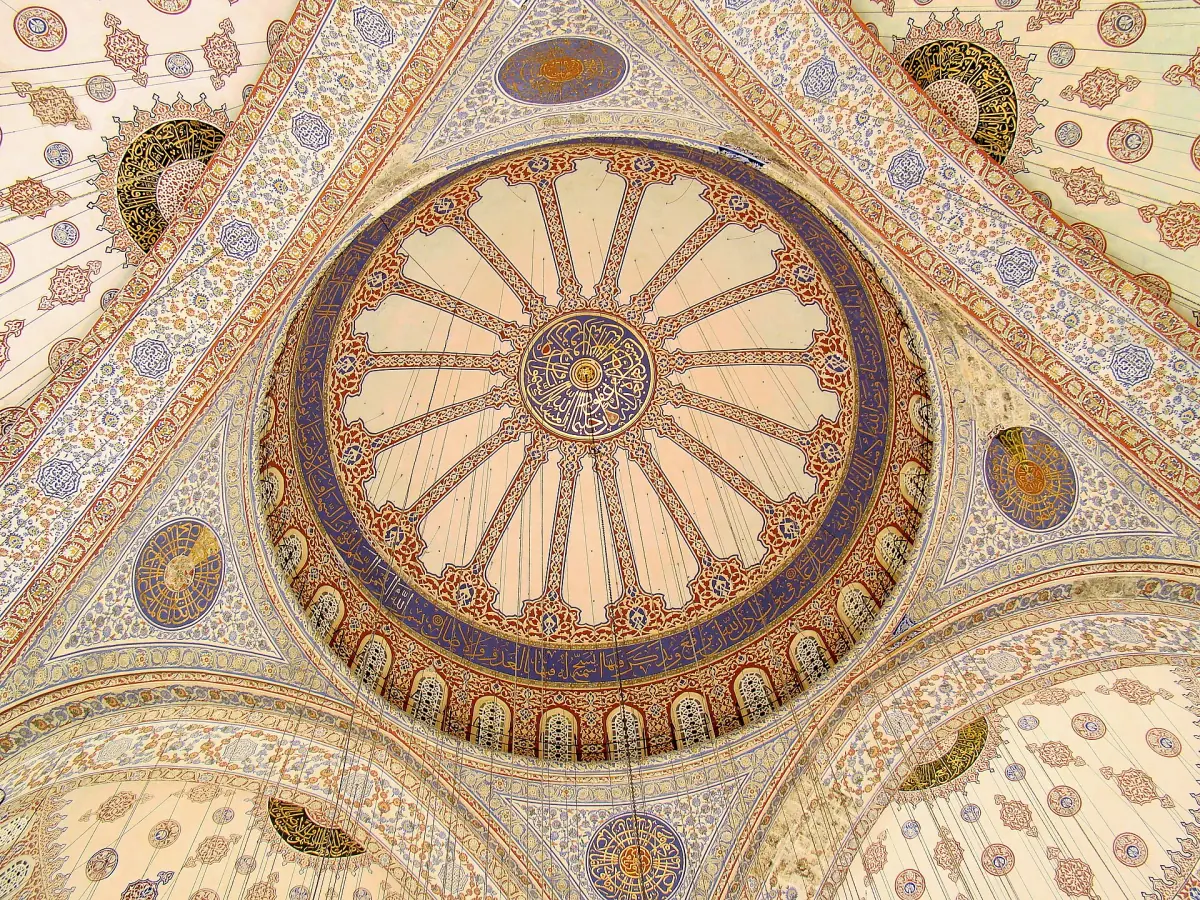
The tiles are underglaze work in more than 50 mostly naturalistic compositions. The tile colour is the usual explanation for the name Blue Mosque. Tiles, painting, wood, stone and metal all belong to the interior.
Inside the Blue Mosque →The windows and light
Over 200 windows light the hall. Look up at the dome and the half-domes to see how the light falls on the painted surfaces.
Blue Mosque and Süleymaniye compared
The two mosques are often mixed up. They have different patrons and different architects. The Süleymaniye was built for Süleyman the Magnificent by Sinan.
| Blue Mosque | Süleymaniye | |
|---|---|---|
| Minarets | 6 | 4 |
| Main dome, height | 43 m | 53 m |
| Main dome, diameter | 23.5 m or 33.4 m, depending on how it is measured | 27.25 m |
| Architect | Sedefkâr Mehmed Ağa | Sinan |
If you can visit only one for its architecture, the Blue Mosque is easier to combine with the Hippodrome and the old city. For the courtyard terrace with its view of the Golden Horn and Galata, add the Süleymaniye. Read more on the Süleymaniye Mosque page.
Beyond the mosque
Neighbouring buildings on the same square.
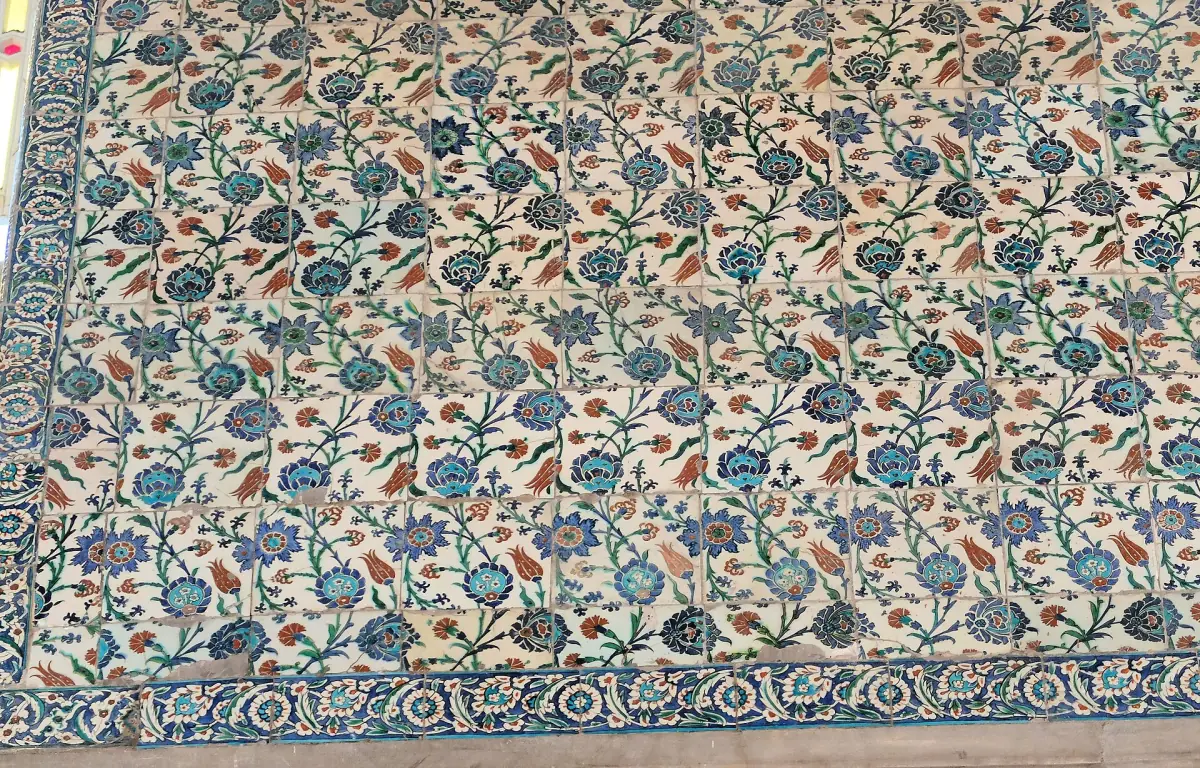
Inside the Blue Mosque
Tiles, domes and the prayer hall.
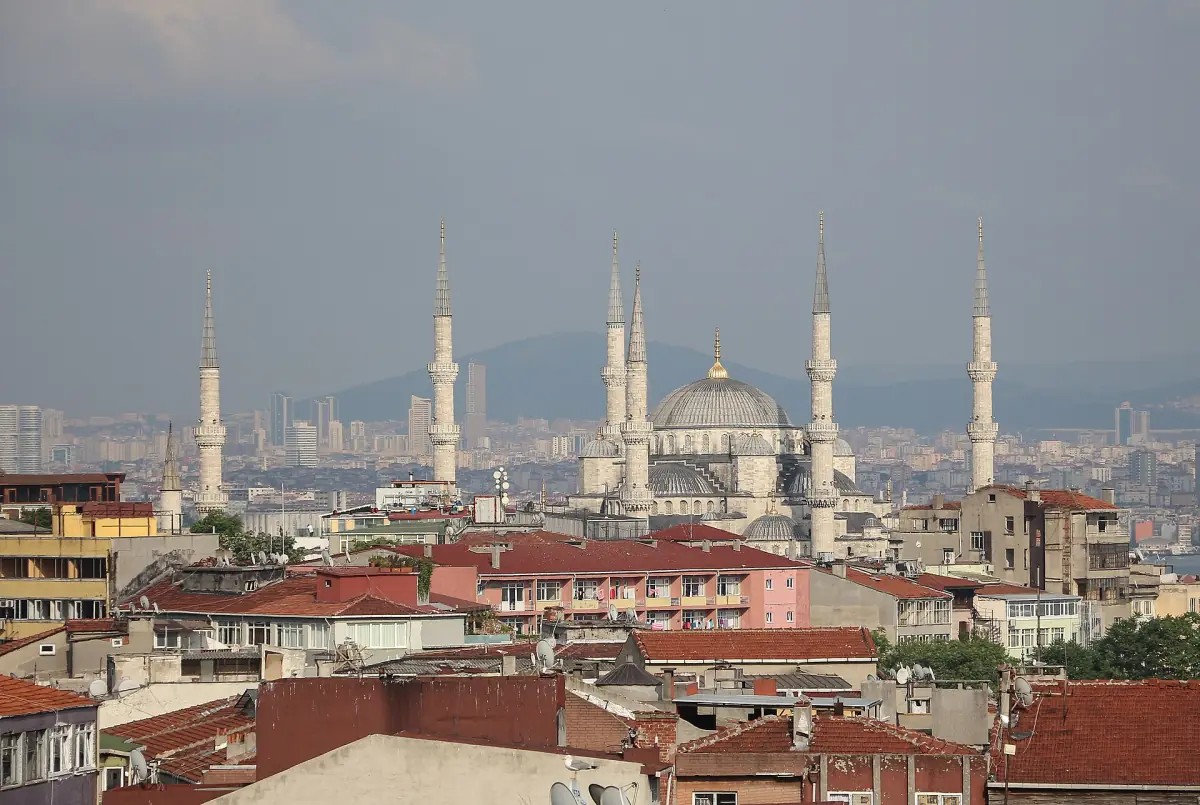
History of the Blue Mosque
Sultan Ahmed I and the building years.
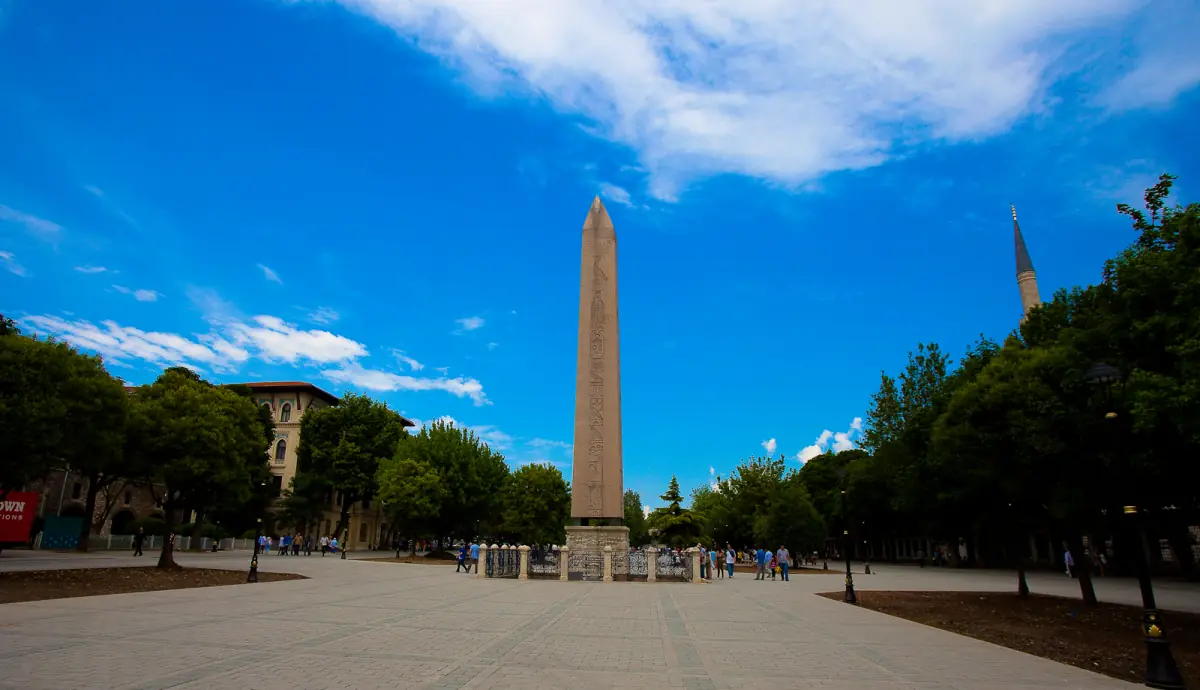
The Hippodrome
Obelisks and the Serpent Column next door.
The Hagia Sophia stands across the park and is a very different building. Its design has its own guide: see Hagia Sophia architecture.
How the plan works
The plan is classical Ottoman. Here is how it reads on site.
Courtyard first
You approach through the arcaded courtyard and only then enter the hall. The visitor area and the prayer area are separate, and prayer always comes first.
One central dome
The central dome is surrounded by half-domes. Together they carry the eye from the walls up to the top of the main dome.
Many materials
Ceramic is the best-known material, but painting, wood, stone and metalwork belong to the decoration too.
A restored finish
The restoration cleaned and repaired tiles and window details, and it covered the chandeliers, the painting and the gilding. The mosque reopened on 21 April 2023, so you can see the building without the scaffolding of earlier years.
Common mix-ups
- Sinan did not build the Blue Mosque. His student Sedefkâr Mehmed Ağa did.
- The Blue Mosque and the Süleymaniye are different buildings with different patrons.
- Not every tile is from İznik. Some come from Kütahya.
- The Hagia Sophia is a separate building across the park.
Blue Mosque architecture: frequently asked questions
How many minarets does the Blue Mosque have?
Six. Four stand at the corners of the main building and two at the front corners of the courtyard.
How tall is the main dome?
About 43 m. The diameter is 23.5 m or 33.4 m, depending on how it is measured.
Who designed the Blue Mosque?
Sedefkâr Mehmed Ağa, a student of Sinan. The mosque was built for Sultan Ahmed I.
How many tiles are there?
More than 20,000, counted at 21,043, from İznik and Kütahya. Not every tile comes from İznik.
Why is it called the Blue Mosque?
The usual explanation is the many blue tiles in the interior. The formal name is Sultan Ahmed Mosque (Sultan Ahmed Camii).
Is this an official website?
No. This is an independent travel guide. It is not run by the mosque, its foundation or any government body.