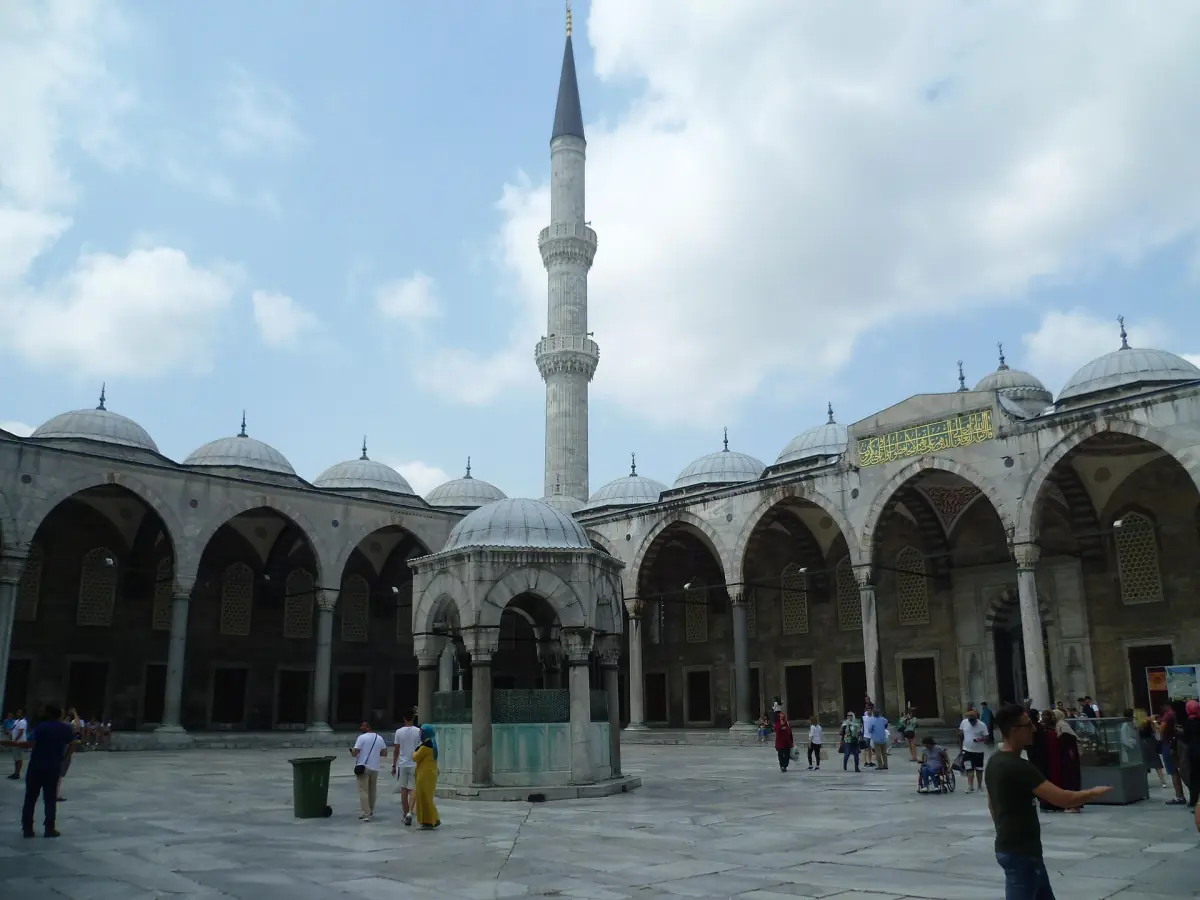
What to wear at the Blue Mosque
The Sultan Ahmed Mosque, the Blue Mosque, is an active mosque, and the dress code is the same for every visitor. Shoulders and knees must be covered, whatever your gender. Women also cover their hair with a scarf. Shoes are taken off before you step onto the carpeted prayer hall.
The rule applies to the courtyard as well, not only to the interior. Appropriate covering is expected as soon as you enter the garden of the mosque, so dress for the queue and not just for the door.
Clothes that are light and loose work best, because Istanbul can be warm and you will stand in line outside. A thin scarf and a light cover-up fit into a day bag and solve most problems.
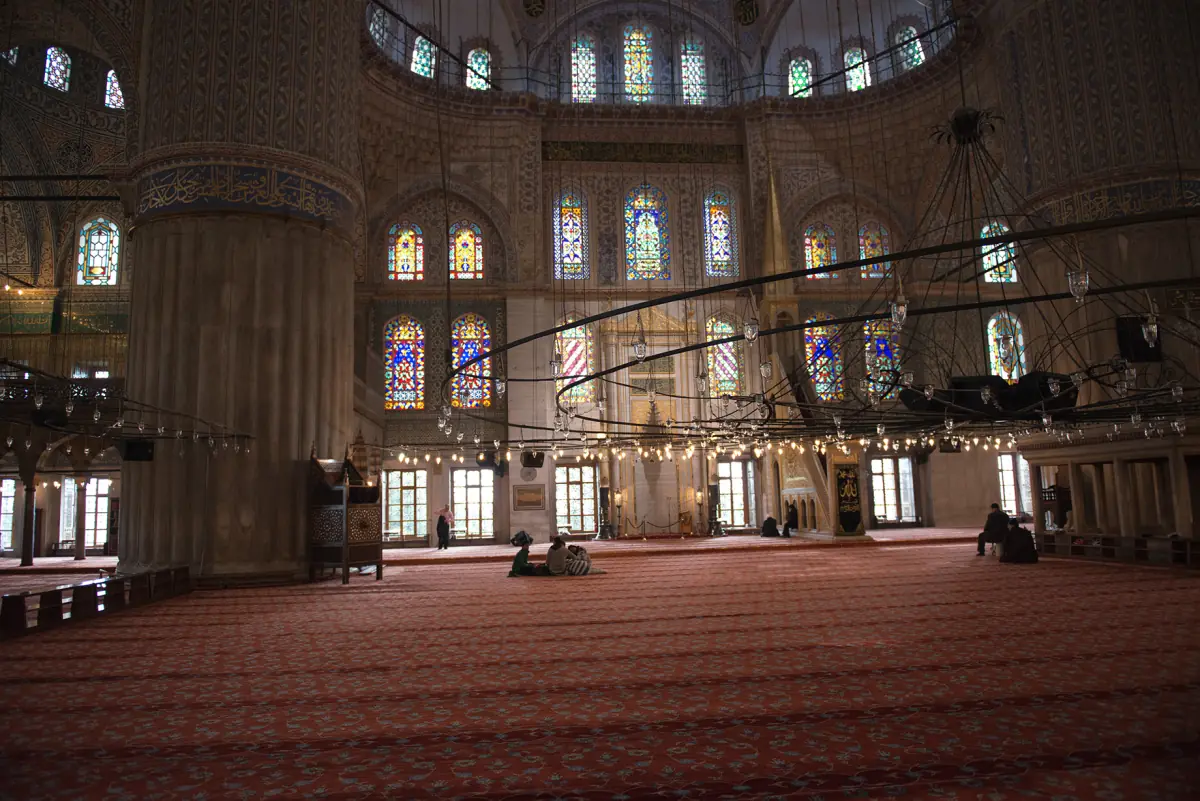
Dress code at a glance
Rules for the courtyard and the prayer hall in 2026.
| Item | Women | Men |
|---|---|---|
| Hair | Covered with a scarf | – |
| Shoulders | Covered | Covered |
| Knees | Covered | Covered |
| Shoes | Off before the carpet | Off before the carpet |
| Courtyard | Same covering as inside | Same covering as inside |
For most visitors the easiest outfit is a pair of long, light trousers or a long skirt, a top with sleeves, a thin scarf in the bag and shoes that slip on and off.
Guided tours with the Blue Mosque
A guide can explain the etiquette on the spot and show you the route. Check the meeting point and what each tour includes before you book.
If you arrive without the right clothes
Loan clothing exists, but do not rely on it.
Loan clothing
Suitable clothing can be borrowed at the issue booth and has to be returned to the same booth. Ask at the booth about a fee.
Scarves and shoe bags
Scarves, cover-ups and plastic bags for your shoes are usually available at the entrance. Their supply can run out at busy times, so bring your own scarf if you can.
Shoes
Shoes are not allowed on the carpet. Carry them in the bag you receive or in your own bag, and keep your hands free for the camera or the children.
Strollers
Strollers are not allowed inside the mosque. Children are not banned, but you carry them or leave the stroller outside.
Behavior inside the mosque
The mosque is open to visitors in a separate area, and everything there happens next to people who pray. A few simple habits keep the visit comfortable for everybody.
- Speak quietly: keep your voice low and do not disturb anyone who is praying.
- Respect the separation: the visitor and prayer areas are marked off. Stay on the visitor side.
- No smoking: smoking is not allowed in the garden.
- Photos: take pictures without flash, and do not photograph people who are praying. Follow the instructions on site.
- Follow the staff: guards and employees with an ID card give the instructions, and you follow them.
Entry is free, so there is no fee for any of this. Details on money are on the entrance page, and the opening times are on the visiting hours page.
Dressing for the season
Covered shoulders and knees do not have to mean heavy clothes. Long-term averages for Istanbul help you choose.
Summer
Daily highs average 29.7 °C in July and August. Thin cotton or linen trousers, a long skirt and a top with sleeves keep you covered and cool. A light scarf also shades your head in the queue.
Spring and autumn
Highs average 17.4 °C in April and 20.6 °C in October. Bring layers you can take off, because the hall is a different climate from the courtyard.
Winter
Highs average 9.6 °C in January and 11.8 °C in December, and December is the wettest month. Wear a coat over your covered outfit and shoes that you can take off with cold fingers.
Shoes in any season
You carry your shoes inside, so choose a pair that is easy to slip on and off. Socks are a matter of comfort on the carpet.
Hagia Sophia has its own rules
If you plan to see Hagia Sophia on the same day, check its rules separately. The Hagia Sophia dress code is covered in our sister guide.
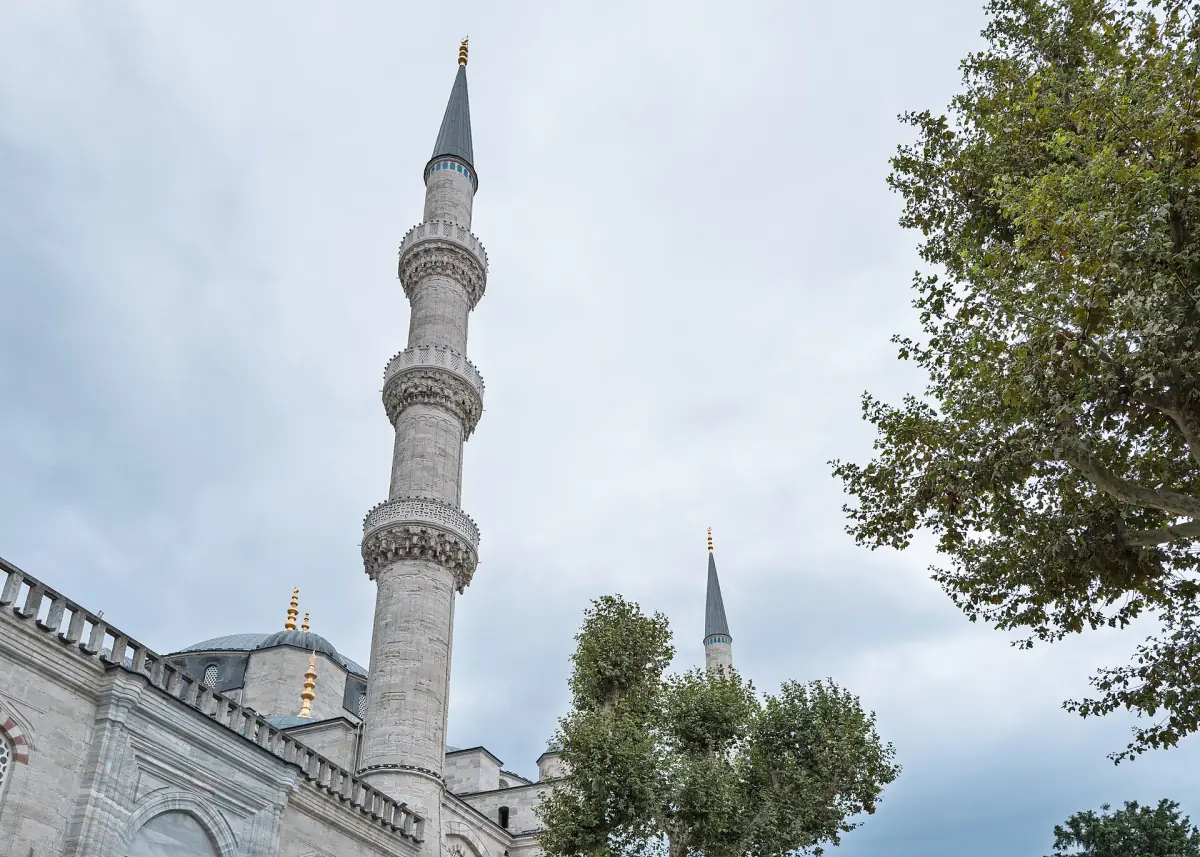
After the visit, look at what you saw. The inside page explains the tiles and the domes, and the architecture page covers the six minarets.
Blue Mosque dress code: frequently asked questions
Do men have to cover their knees?
Yes. Shoulders and knees must be covered for all visitors, so shorts above the knee and sleeveless tops are not suitable for men or women.
Do women have to cover their hair?
Yes, women cover their hair with a scarf.
Do I need to dress properly in the courtyard?
Yes. The rule for appropriate covering applies in the garden of the mosque as well, not just in the building.
Can I borrow clothes?
Yes, suitable clothing can be borrowed at the issue booth and must be returned to the same booth. Scarves, cover-ups and shoe bags are usually available too, but bring your own scarf to be safe.
Can I take photos inside?
Photos are generally taken without flash, because flash is not allowed. Do not photograph people who are praying, and follow any instruction from the staff.
Are children allowed?
Children are welcome to visit, and the same covering rules apply to them. Strollers are not allowed inside.