
What you see inside the Blue Mosque
The interior of the Sultan Ahmed Mosque is one large prayer hall under a central dome, surrounded by half domes. Its tiles give the building its popular name: the Blue Mosque. The wall surfaces carry blue and white ceramics, and painted decoration, wood, stone and metalwork complete the room.
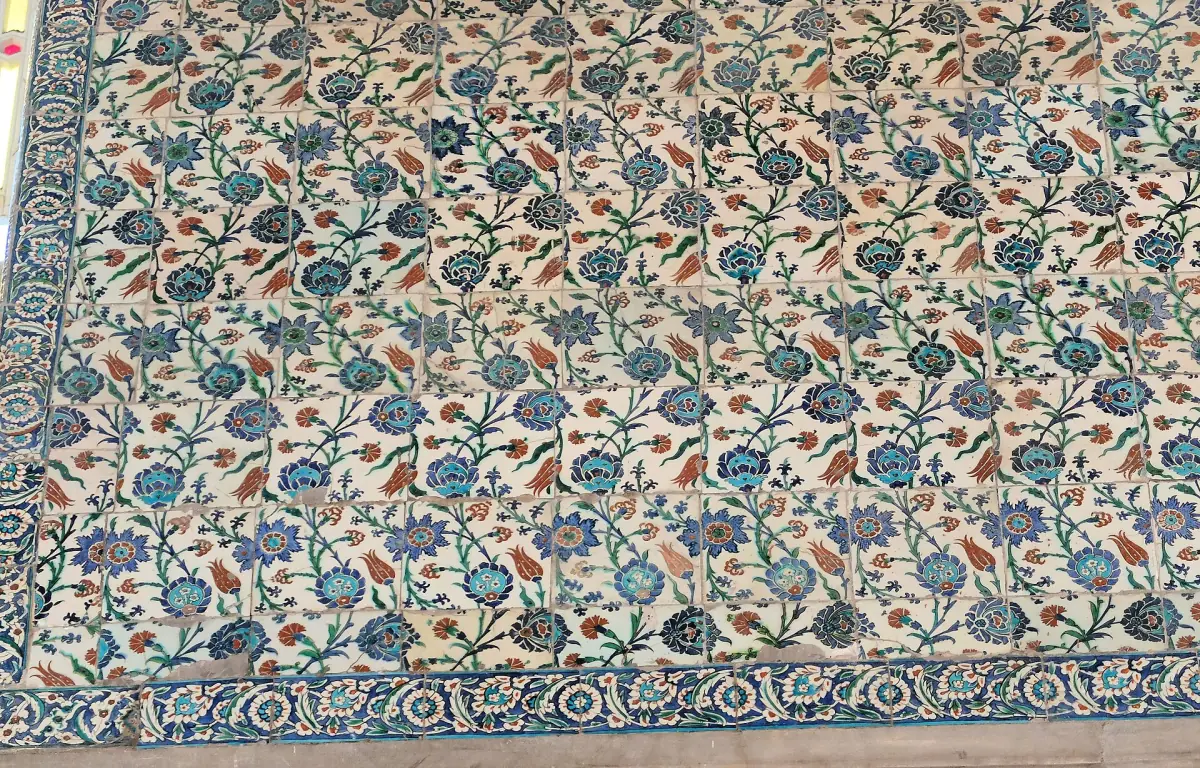
There are 21,043 tiles, made in İznik and Kütahya in underglaze technique, in more than 50 mostly naturalistic designs. In round figures, that is more than 20,000 tiles.
The windows add to the effect. More than 200 of them let daylight into the hall, so the colors change with the weather and the time of day.
Where to look
Five things to find once you stand on the visitor side.
The central dome
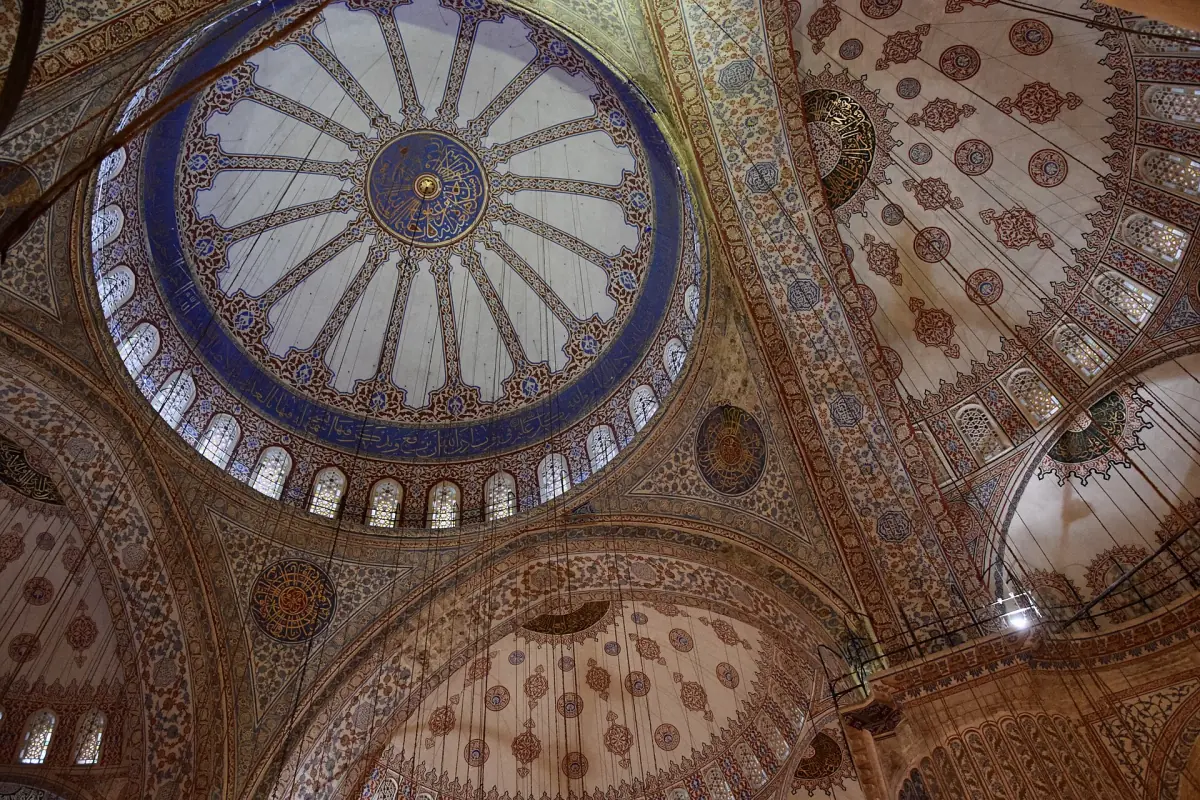
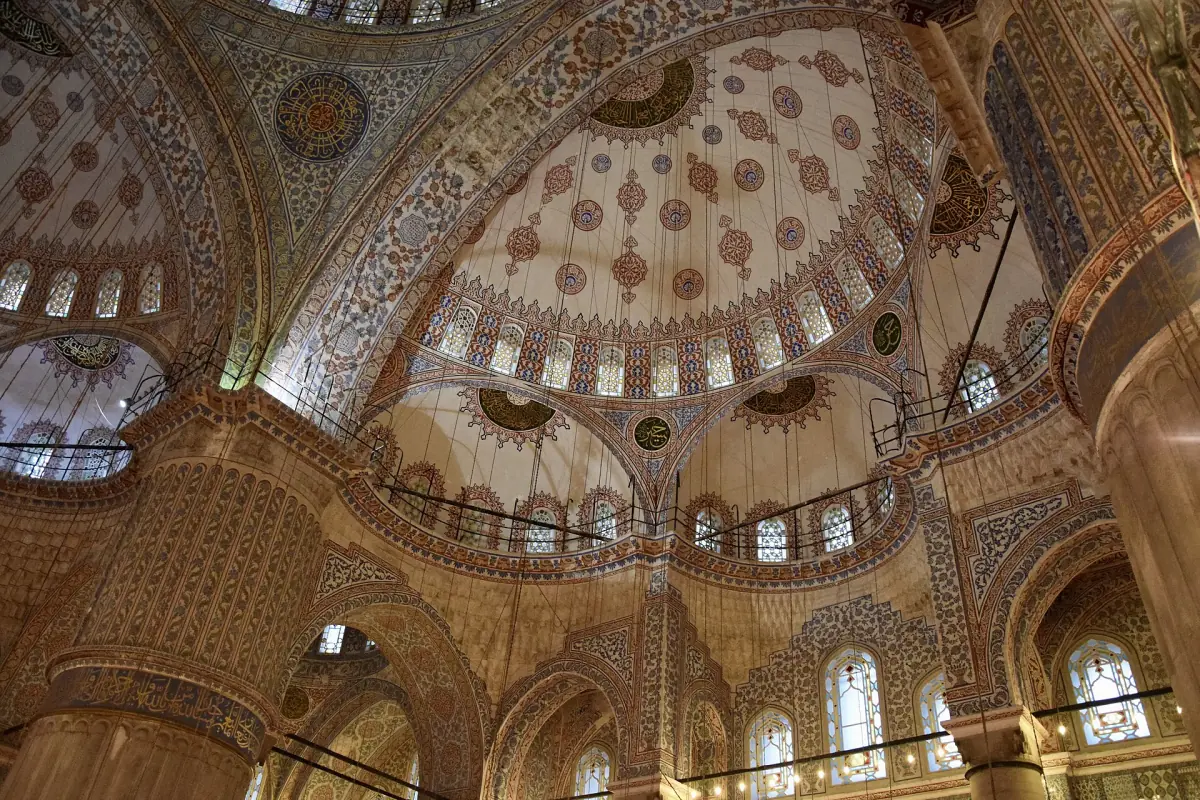
The main dome rises 43 m, with half domes stepping down around it. Look up from the visitor area to take in the layers.
The tile fields
Most designs are naturalistic. Move close to a panel, then step back to see how the blue and the white work together.
The painted surfaces
Painting is part of the decoration too. Look at the domes for the patterns.
The windows
More than 200 windows light the hall. Watch how the daylight changes the colors of the tiles.
The chandeliers
Hanging lamps are part of the room's decoration, and they were among the items cleaned or repaired in the restoration.
Our pick: inside both buildings
Hagia Sophia is the natural second stop across the square, and this small-group tour covers both inside.
Hand-picked tours, booked through GetYourGuide. Prices are indicative starting prices in euros (as of October 2026). Tap a tour for live availability and the current price in your currency.
Blue Mosque tours with a guide
A guide can point out the tiles, the dome and the story behind them. Look at the duration, the language and whether the tour includes a visit inside.
A working prayer hall
The interior is a place of prayer first. The visitor area and the prayer area are separate, and the sightseeing is secondary to worship. Stay on the visitor side, keep your voice low and do not photograph people who are praying.
A closed-off section is closed for a reason. Do not count on entering any area that is marked off for prayer, and follow the instructions of the staff. Shoes stay off on the carpet, and flash photography is not allowed.
The rules are the same for every visitor. Before you go in, read the dress code and check the visiting hours, which depend on the prayer times.
The 2023 restoration
The mosque reopened for prayer on 21 April 2023 after a long restoration, and the work is complete. The restoration included cleaning and repairs to tiles, work on window details and chandeliers, and treatment of the paintwork and the gilding. These were historical measures.
The work went on in stages over about five years. In that time the mosque was fully closed for only about five months, and otherwise it ran at limited capacity.
As in every historic building, individual areas can be screened off from time to time. Treat a view without scaffolding as likely, but not as a promise.
How the room is built
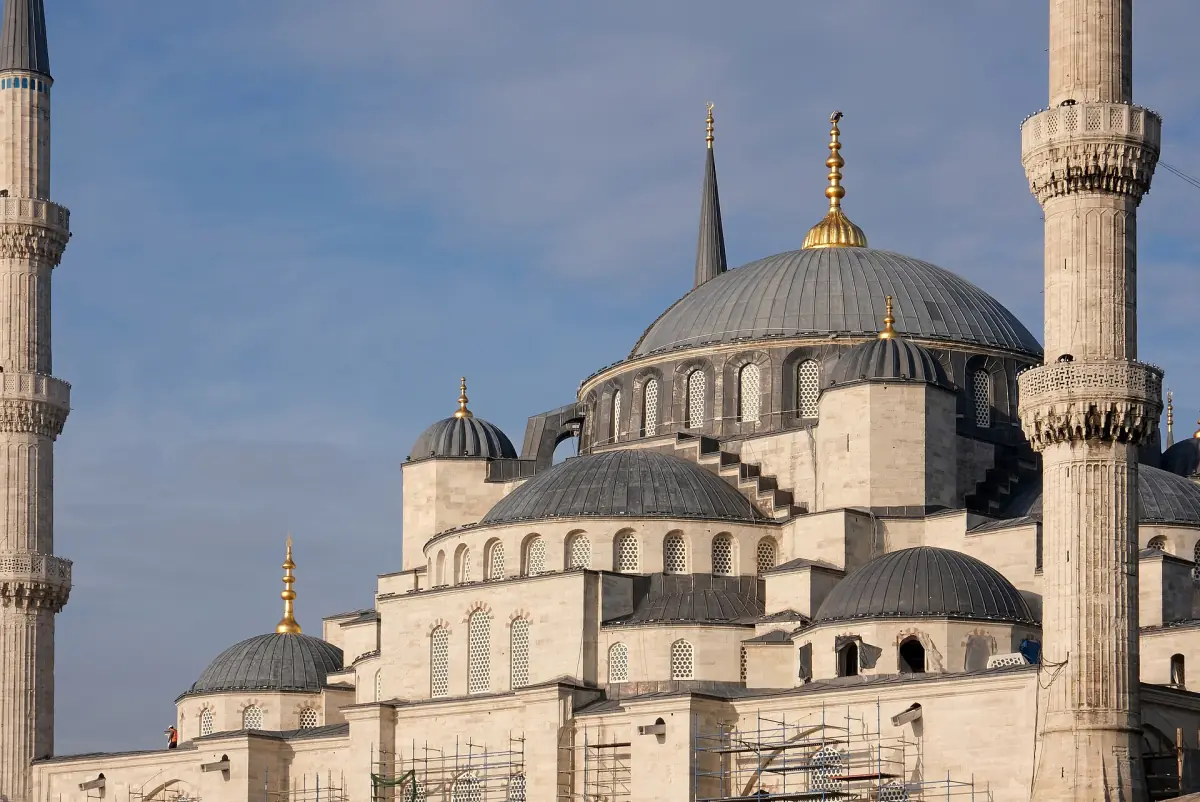
The plan is classic Ottoman: a prayer house with a central dome and surrounding half domes, in front of an arcaded courtyard. The prayer house measures 64 by 72 m, and the main dome is 43 m high. The mosque has six minarets, four at the corners of the main building and two at the front corners of the courtyard.
The courtyard is part of the visit, and the dress code applies there too. You pass through it on the way in, so look at the arcades before you take off your shoes. The architecture page goes into the dome and the minarets in more detail.
The original complex was larger than the mosque. It also had a school, a medrese, the Arasta market, a bath, a hospital, a soup kitchen and a tomb complex. Not all of those parts are open to visitors today, so do not expect to enter every building.
Planning your time inside
Most visitors spend a short time in the visitor area, because the hall is shared with people who come to pray. A visit fits comfortably between two prayer breaks, so check the visiting hours first.
- Pick the right day: on Fridays visitors enter only from 14:30, and the other six days offer a longer window.
- Look up first, then close: start with the dome and the half domes, then move to the tile fields and the painted surfaces.
- Keep moving gently: do not block the way or stand between praying people and the front of the hall.
- Mind the small print: follow the markers that show which part is open to visitors.
Entry is free, with no ticket and no reservation. After the mosque, the Hippodrome is a few minutes away on foot.
After the interior
Where to go next.
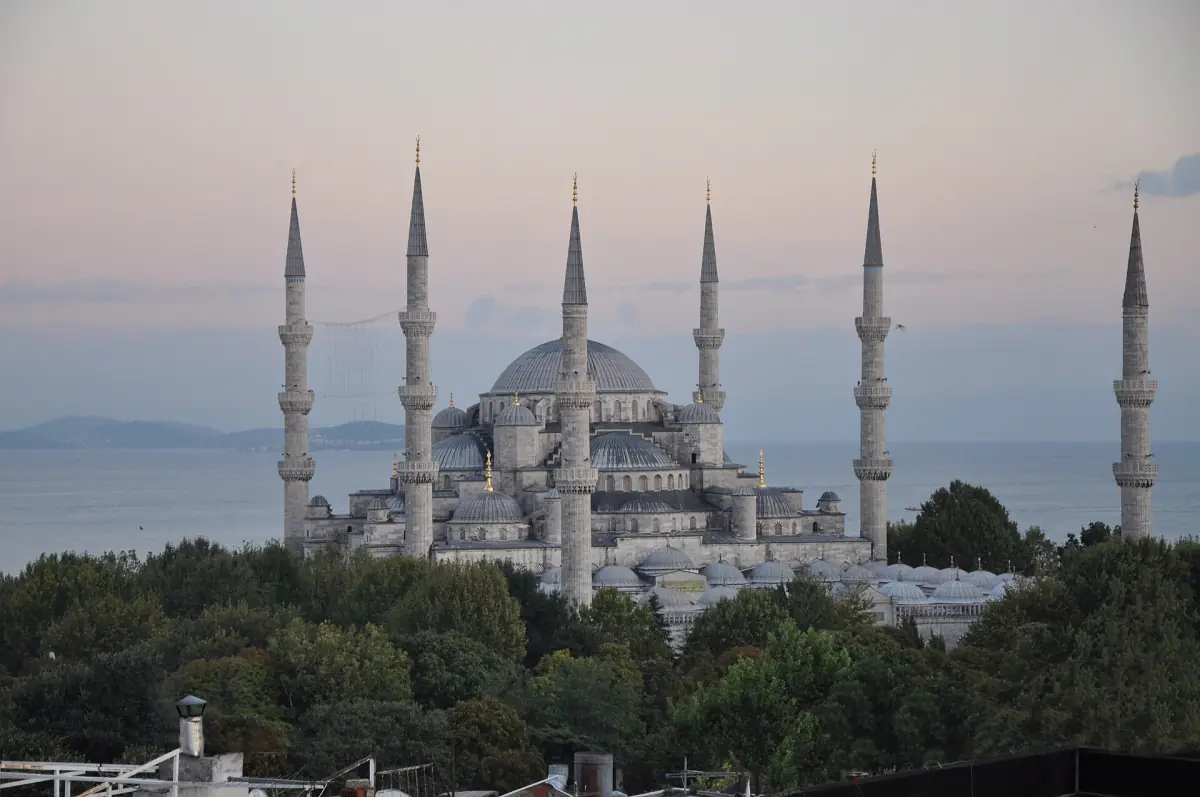
Domes and six minarets
How the building is laid out, from the courtyard to the half domes.
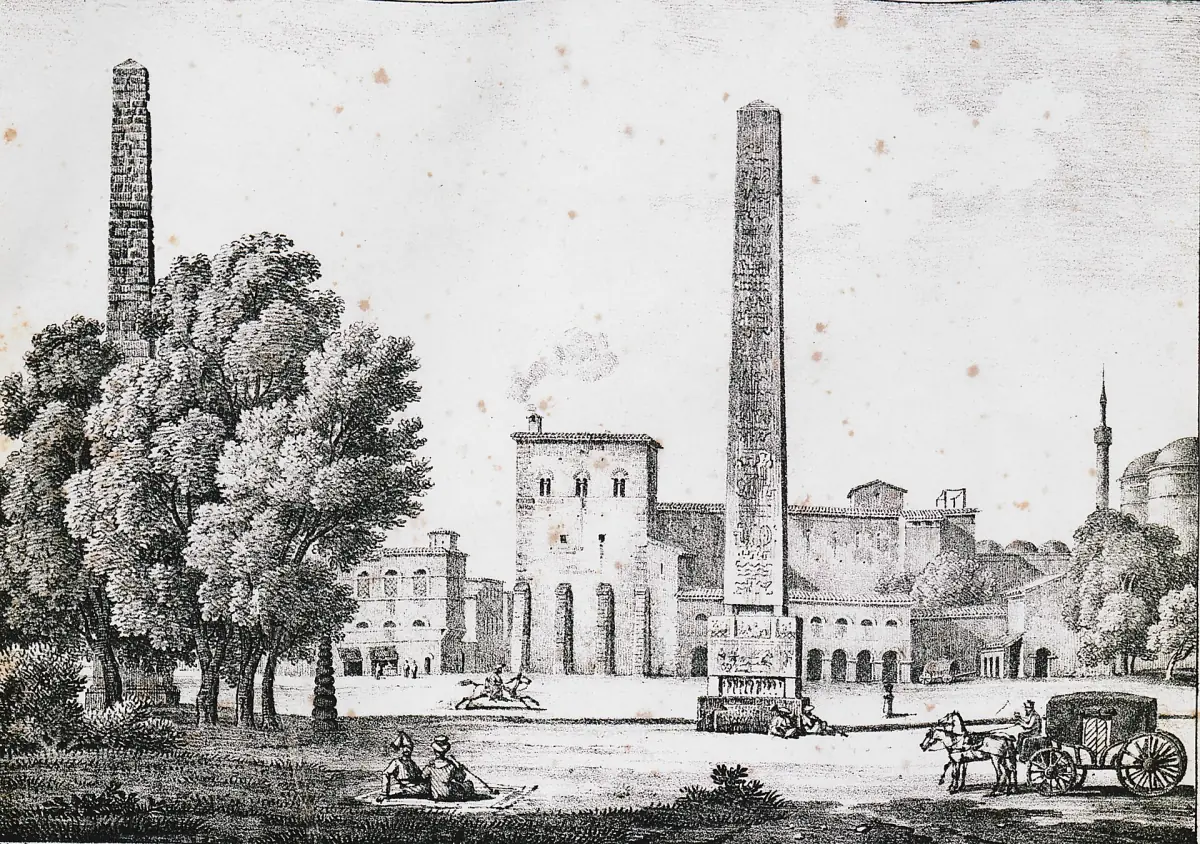
Sultan Ahmed I and the building years
Who built the mosque and when, plus the restoration.
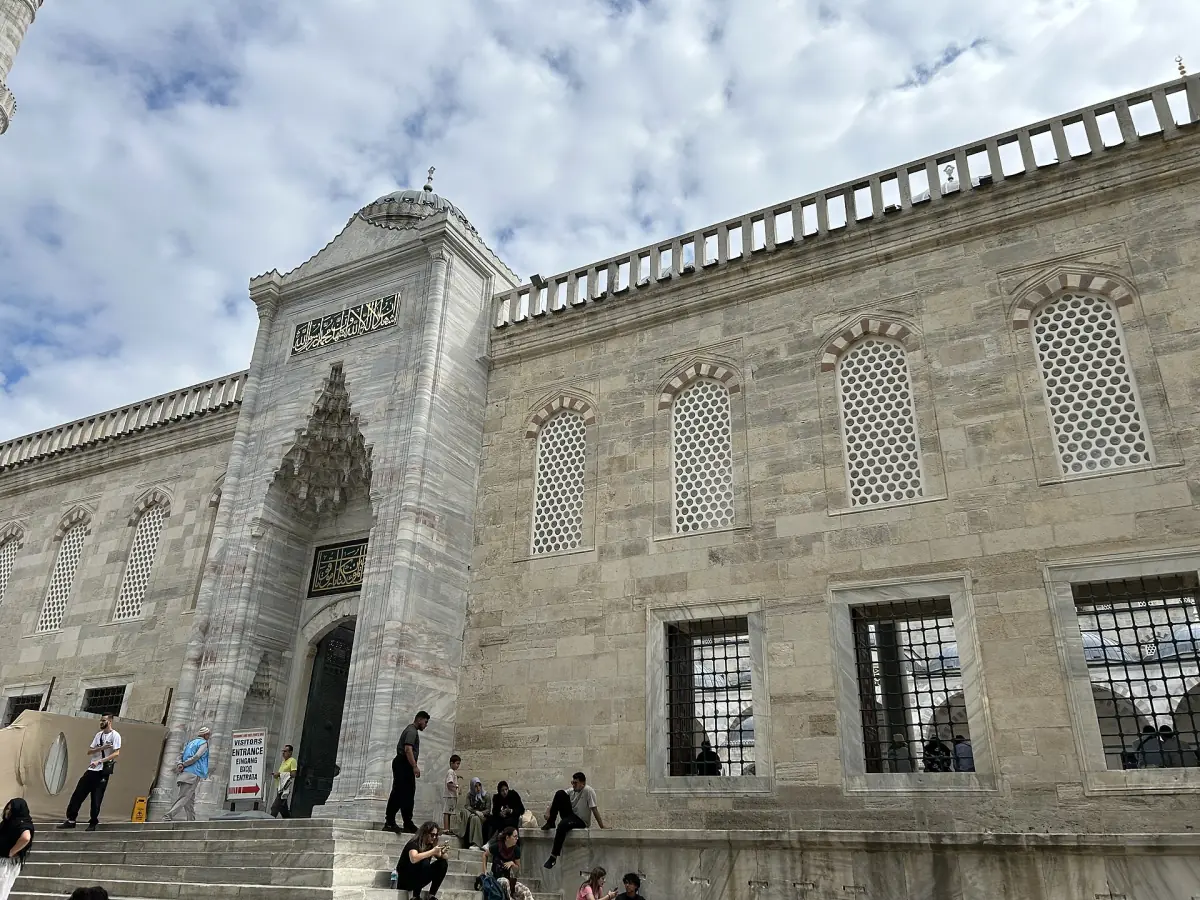
Entrance and queue
Free entry, no reservation and how to avoid the longest line.
If Hagia Sophia is on your list, the mosque interior there is a different building with its own rules. Our sister guide covers the inside of Hagia Sophia.
Inside the Blue Mosque: frequently asked questions
Why is it called the Blue Mosque?
The popular name comes from the blue tiles that cover large parts of the interior. The official name is the Sultan Ahmed Mosque, after the sultan who ordered it.
How many tiles are there?
There are 21,043 tiles, made in İznik and Kütahya in underglaze technique. In round figures, that is more than 20,000.
How many windows does the mosque have?
More than 200.
Can I walk around the whole interior?
You can visit the area that is set aside for visitors. The prayer areas and other marked sections are not open to sightseeing, and you should follow the staff.
Is the restoration still going on?
No. The restoration finished and the mosque reopened on 21 April 2023. Small areas can still be screened off at times.
Can I take photos inside?
Photos are generally taken without flash, because flash is not allowed. Do not photograph people who are praying, and follow any local instruction.