
Sultan Ahmed I and the building years
Sultan Ahmed I commissioned the mosque, and Sedefkâr Mehmed Ağa, a student of Sinan, designed it. Work began in 1609. The mosque itself dates to 1609–1616 or 1609–1617. The wider complex, the külliye, dates to 1609–1620. Do not treat the two as the same building project.
The mosque stands on the historic peninsula, in the archaeological area of Sultanahmet, next to the old Hippodrome. Since 1985 it has been part of the UNESCO World Heritage site Historic Areas of Istanbul. It is not a separate World Heritage site on its own. To see the area on foot with a guide, look at Istanbul old city tours.
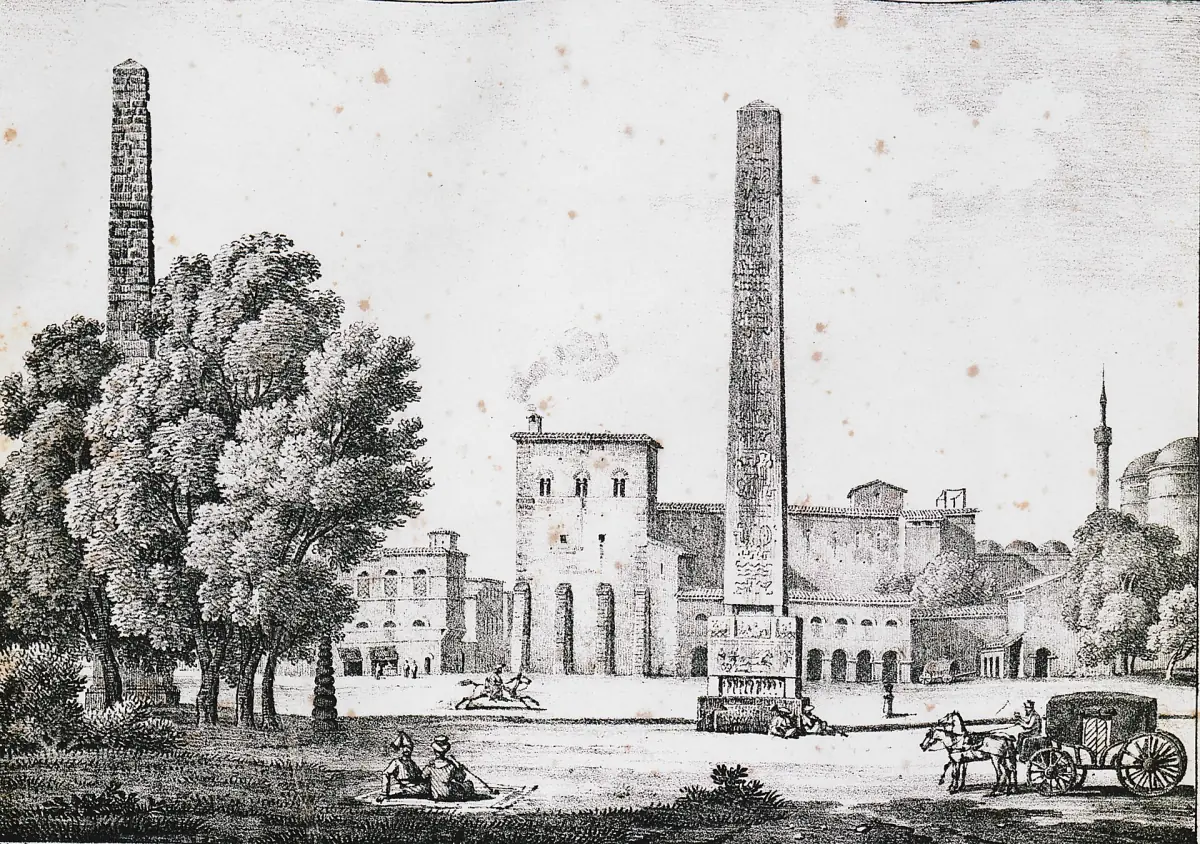
Our pick: both buildings with a guide
Licensed guides take you through Hagia Sophia and the Blue Mosque, the two buildings that face each other across Sultanahmet.
Hand-picked tours, booked through GetYourGuide. Prices are indicative starting prices in euros (as of October 2026). Tap a tour for live availability and the current price in your currency.
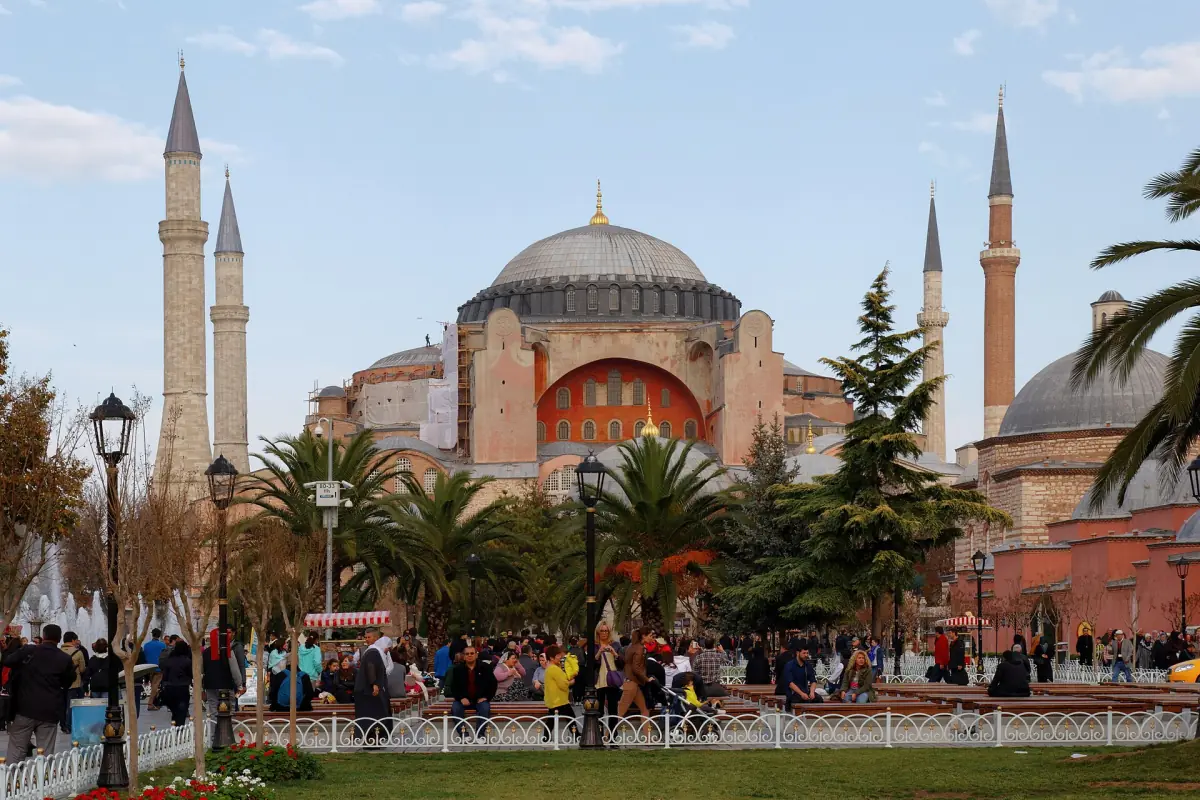
Old city tours around the Blue Mosque
Guided walks through Sultanahmet, with live prices and availability.
The complex around the mosque
The mosque was one part of a larger charitable and civic ensemble.
What the complex held
The külliye included the mosque, a school, a madrasa, the Arasta market, a bath, a hospital, a soup kitchen and a burial complex. Not all of these parts can be visited today, so do not plan on seeing every one.
The Arasta bazaar
The market was part of the plan from the start. Shops in the Arasta bazaar still stand beside the mosque.
The tomb of Ahmed I
The türbe is part of the complex. It stands north of the madrasa in its own courtyard. Kösem Sultan, Osman II and Murad IV are also named among those buried there. Check on site whether the tomb is open on the day you visit.
The Hippodrome next door
The mosque was built beside the ancient Hippodrome, which in Ottoman times was called At Meydanı. The monuments on the square predate the mosque by centuries.
The Hippodrome →From the building years to today
A short timeline.
| Year | Event |
|---|---|
| 1609 | Construction begins under Sultan Ahmed I |
| 1616 or 1617 | Mosque completed |
| 1620 | End of the wider külliye |
| 1985 | The area enters the UNESCO World Heritage list as part of Historic Areas of Istanbul |
| 2017 or 2018 | Start of the restoration |
| 21 April 2023 | Reopening after Friday prayer |
For most readers, "built 1609 to 1616, finished with the surrounding complex by 1620" is the simplest accurate summary.
The restoration is finished
The restoration ended with the reopening on 21 April 2023. The scaffolding and closures of earlier years are over. The work covered cleaning and repair of tiles, window details, chandeliers, painting and gilding.
Over the roughly five years of work, the mosque was fully closed for only about five months and otherwise open with limited capacity. Today it is again a working mosque with a visitor route. Opening hours still depend on prayer times, see visiting hours.
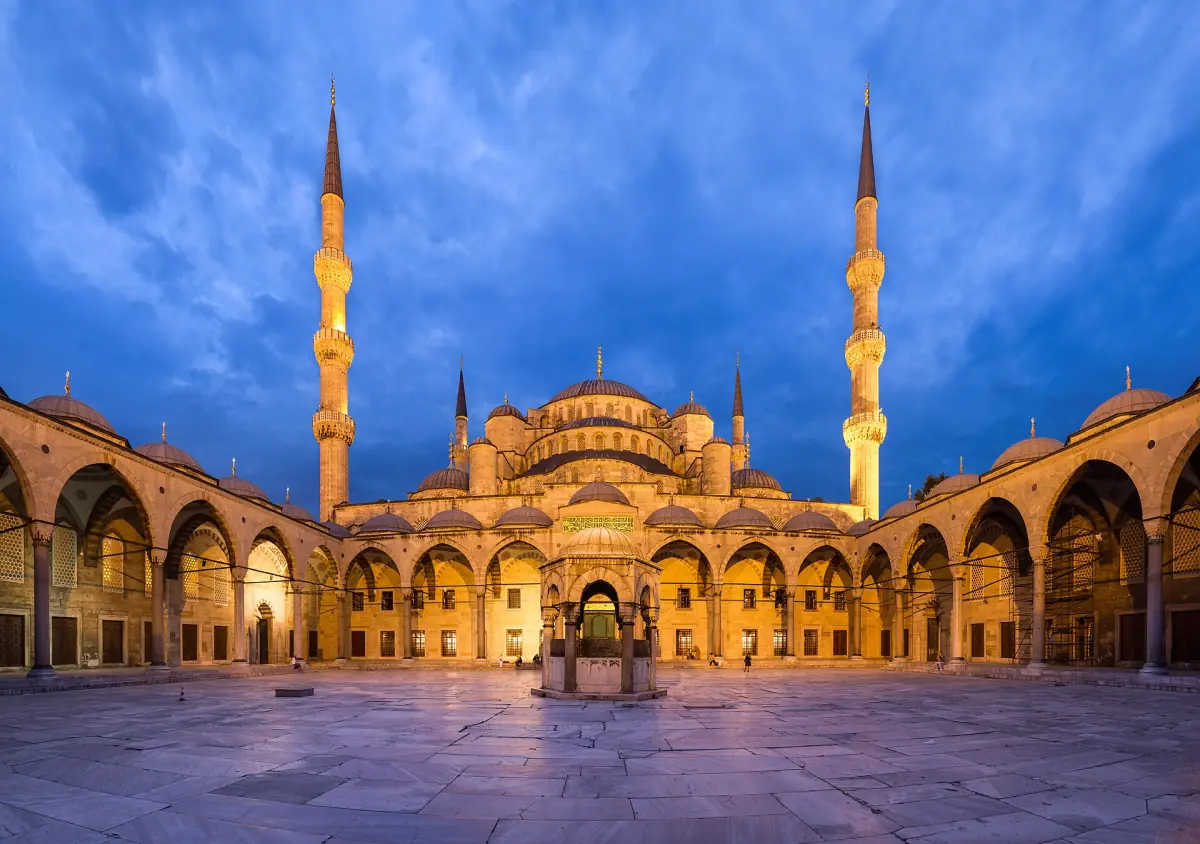
Keep reading
More on the building and the square.
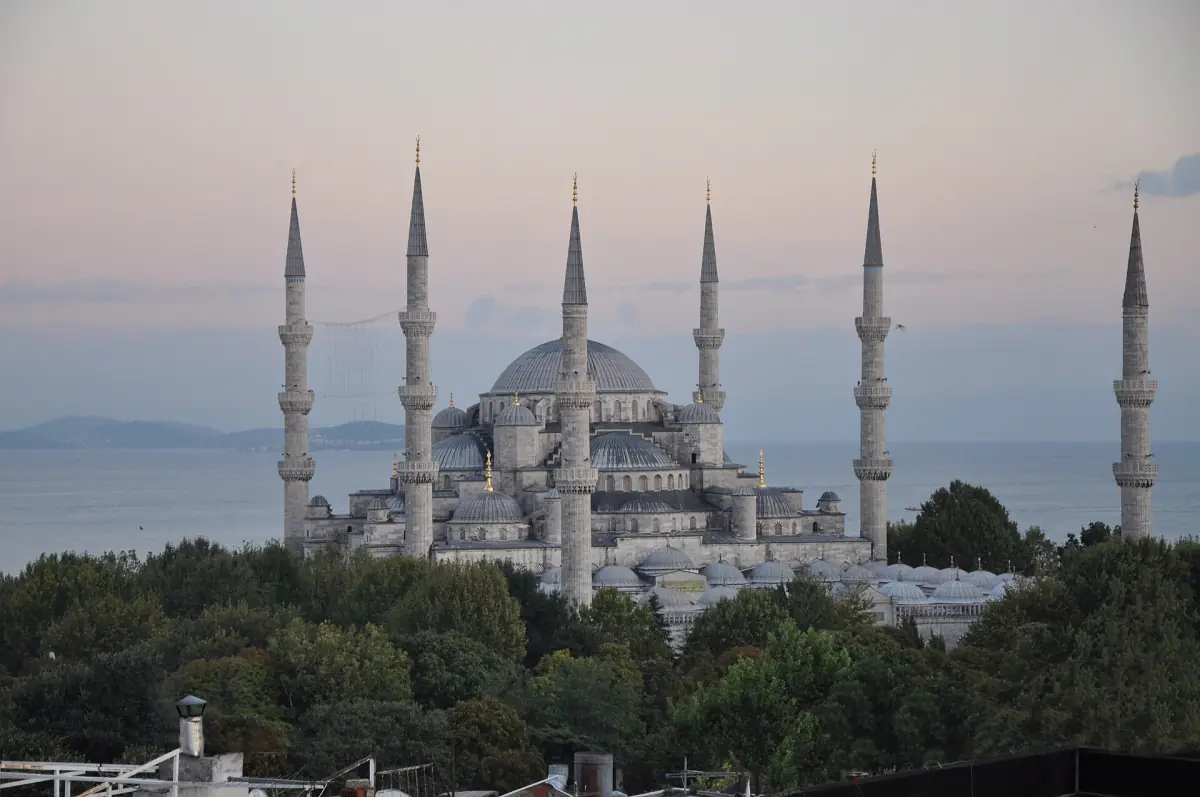
Six minarets and the domes
Figures, plan and what to look at.
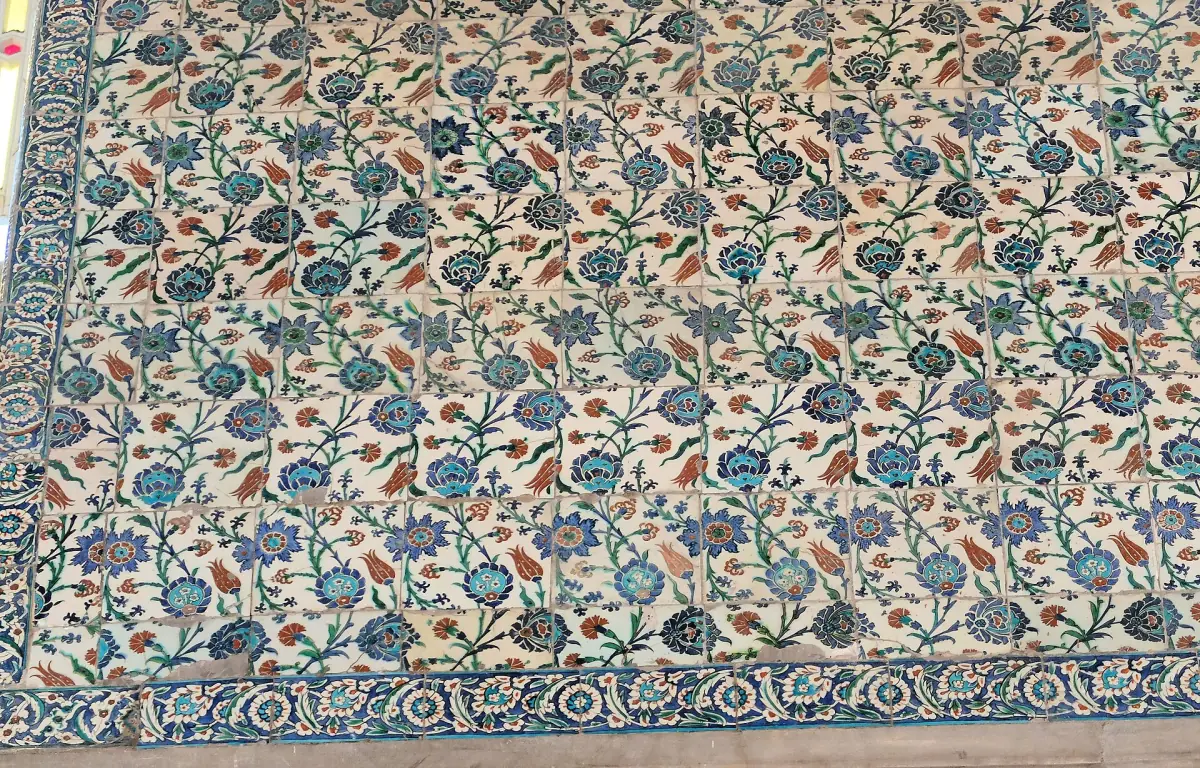
Inside the Blue Mosque
Tiles, domes and the prayer hall.
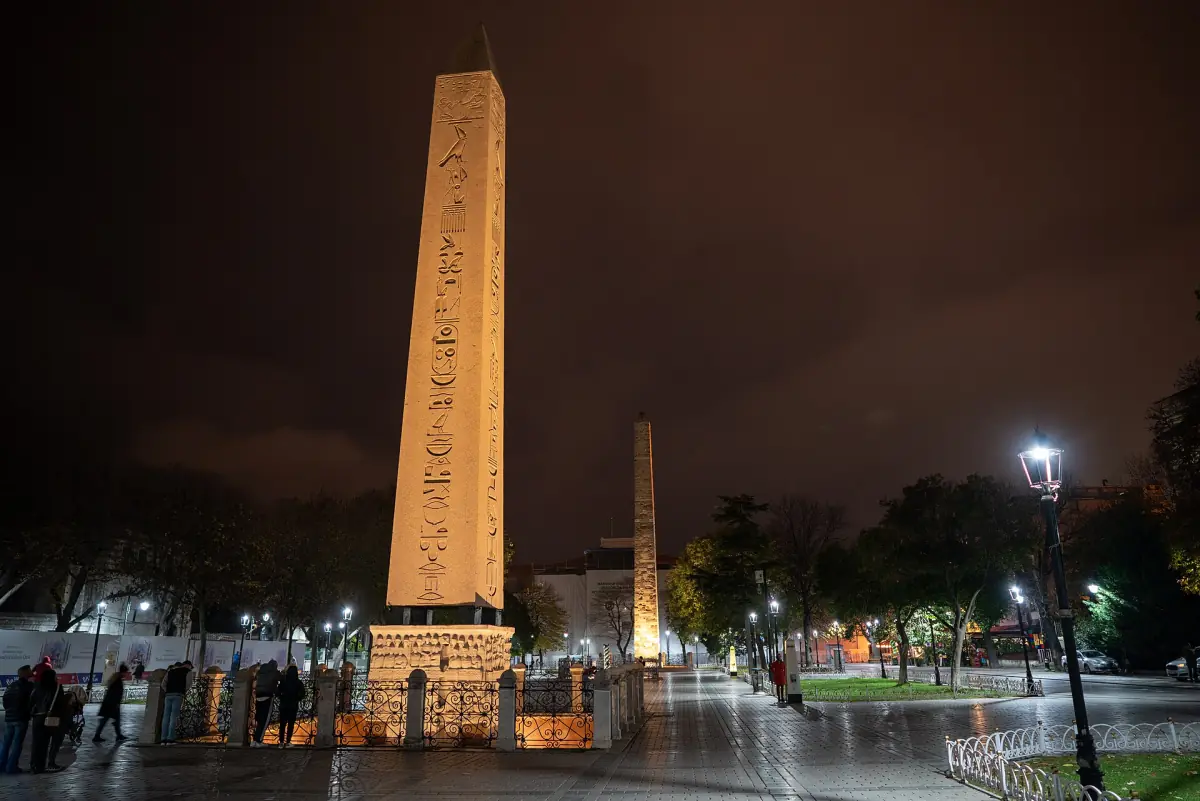
The Hippodrome
Obelisks, the Serpent Column and the German Fountain.
The Hagia Sophia is the older neighbour and has its own story: see Hagia Sophia history.
A visit with the history in mind
A simple order that follows the story on foot.
1. Start on the square
The Hippodrome shows what was here before the mosque. The German Fountain at the north end faces the tomb of Ahmed I.
2. Walk to the courtyard
The courtyard is the entrance to the visitor route. Dress rules apply here already, see the dress code.
3. Enter between prayers
Visits pause around prayer times and start at 14:30 on Fridays. Free entry, no ticket and no reservation for a normal visit.
4. Finish at the Arasta shops
The shops beside the mosque belong to the original complex.
What the name means
The building is called Sultan Ahmed Camii or Sultanahmet Camii in Turkish and Blue Mosque in English. The English name comes from the blue tiles in the interior.
The people in the story
Who did what, in one table.
| Person | Role |
|---|---|
| Sultan Ahmed I | Patron of the mosque and the complex, buried in the tomb beside it |
| Sedefkâr Mehmed Ağa | Architect, a student of Sinan |
| Kösem Sultan, Osman II, Murad IV | Also named among those buried at the complex |
If you are choosing between the Blue Mosque and the work of Sinan himself, add the Süleymaniye Mosque to your list. For a first visit, most people start with the Blue Mosque because it sits on the square with the Hippodrome.
Blue Mosque history: frequently asked questions
When was the Blue Mosque built?
Work began in 1609. The mosque dates to 1609–1616 or 1609–1617. The whole complex dates to 1609–1620.
Who built the Blue Mosque?
Sultan Ahmed I commissioned it. The architect was Sedefkâr Mehmed Ağa, a student of Sinan.
Is the restoration finished?
Yes. The mosque reopened on 21 April 2023. The scaffolding and closures of the restoration years are over.
Is Sultan Ahmed buried at the mosque?
Yes. His türbe is part of the complex, north of the madrasa in its own courtyard. Opening times of the tomb can change, so check on site.
Is the Blue Mosque a UNESCO site by itself?
No. It belongs to the World Heritage site Historic Areas of Istanbul, listed in 1985.
Is this an official website?
No. This is an independent travel guide with no link to the mosque, its foundation or any government body.