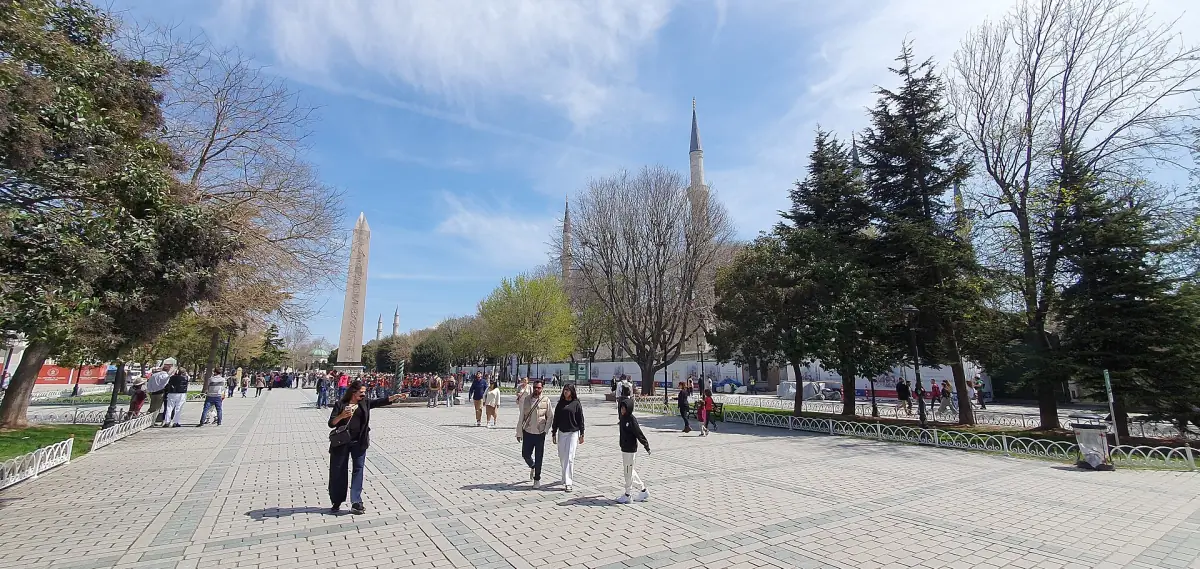
An ancient racecourse, now a public square
The Hippodrome was the great chariot course of Roman and Byzantine Constantinople. In Ottoman times the place was called At Meydanı. Today it is the open Sultanahmet Square between the Blue Mosque and the Hagia Sophia. The ancient Hippodrome is part of the UNESCO World Heritage site Historic Areas of Istanbul.
The square is not a preserved racetrack. What remains are a few monuments on the square, easy to pass on a walk to the mosque. If you want the stories behind them, join one of the Istanbul old city tours that start on the square.
Our pick: a walk that includes the Hippodrome
This morning walk covers the Hippodrome alongside the Blue Mosque and ends at the Grand Bazaar.
Hand-picked tours, booked through GetYourGuide. Prices are indicative starting prices in euros (as of October 2026). Tap a tour for live availability and the current price in your currency.
Old city tours from Sultanahmet Square
Walks that include the Hippodrome, with live prices and availability.
The monuments on the square
What each one is and what to know.
| Monument | What it is | Good to know |
|---|---|---|
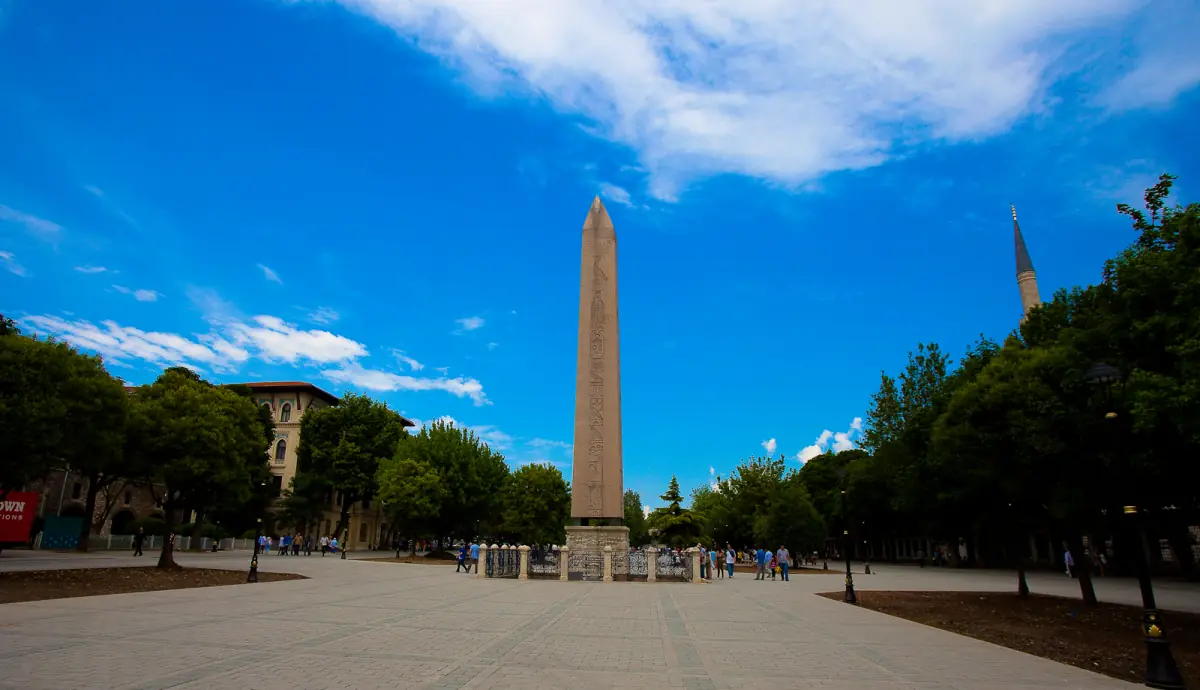
| Obelisk of Theodosius | Egyptian obelisk, first raised under Pharaoh Thutmose III at the Karnak temple | Set up here in 390 under Theodosius I |
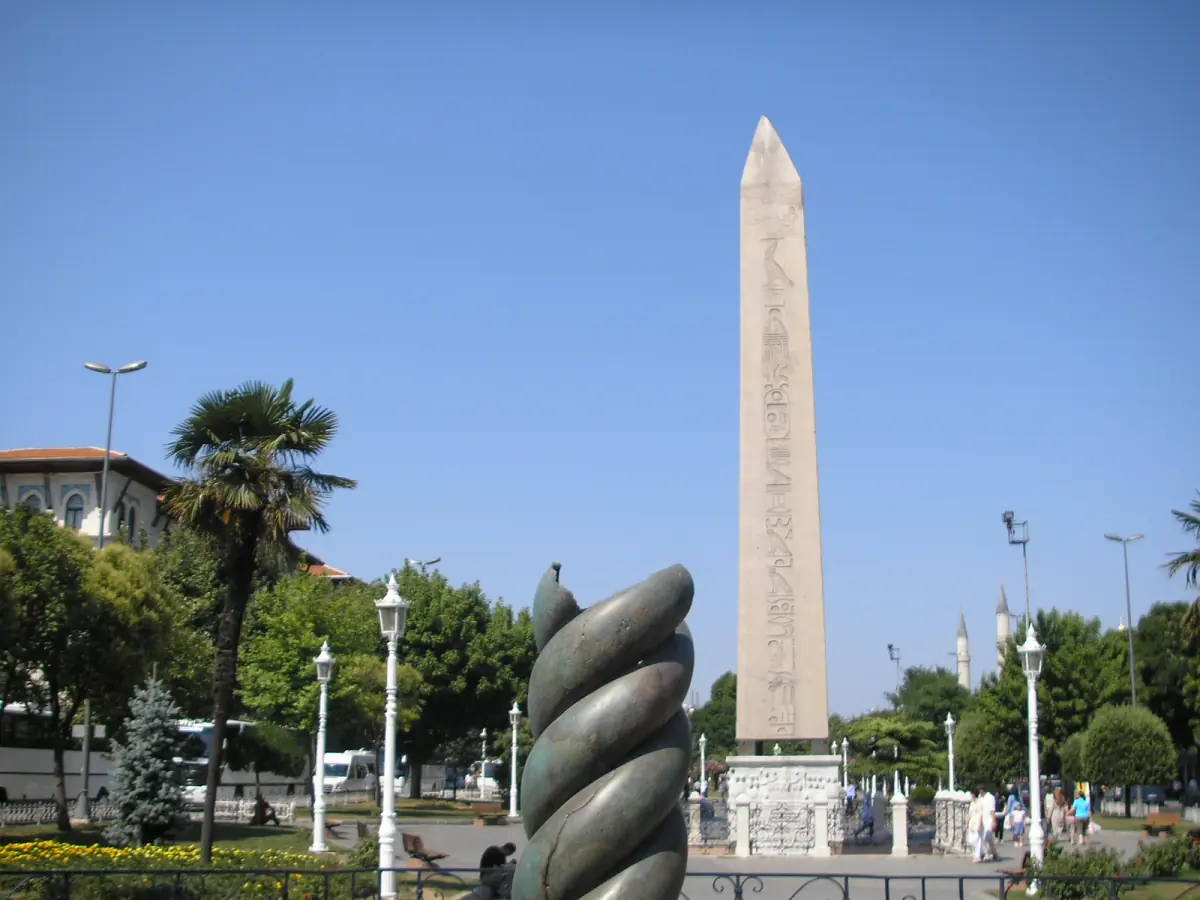
| Serpent Column | A column from the Temple of Apollo at Delphi | Also known as Yılanlı Sütun |
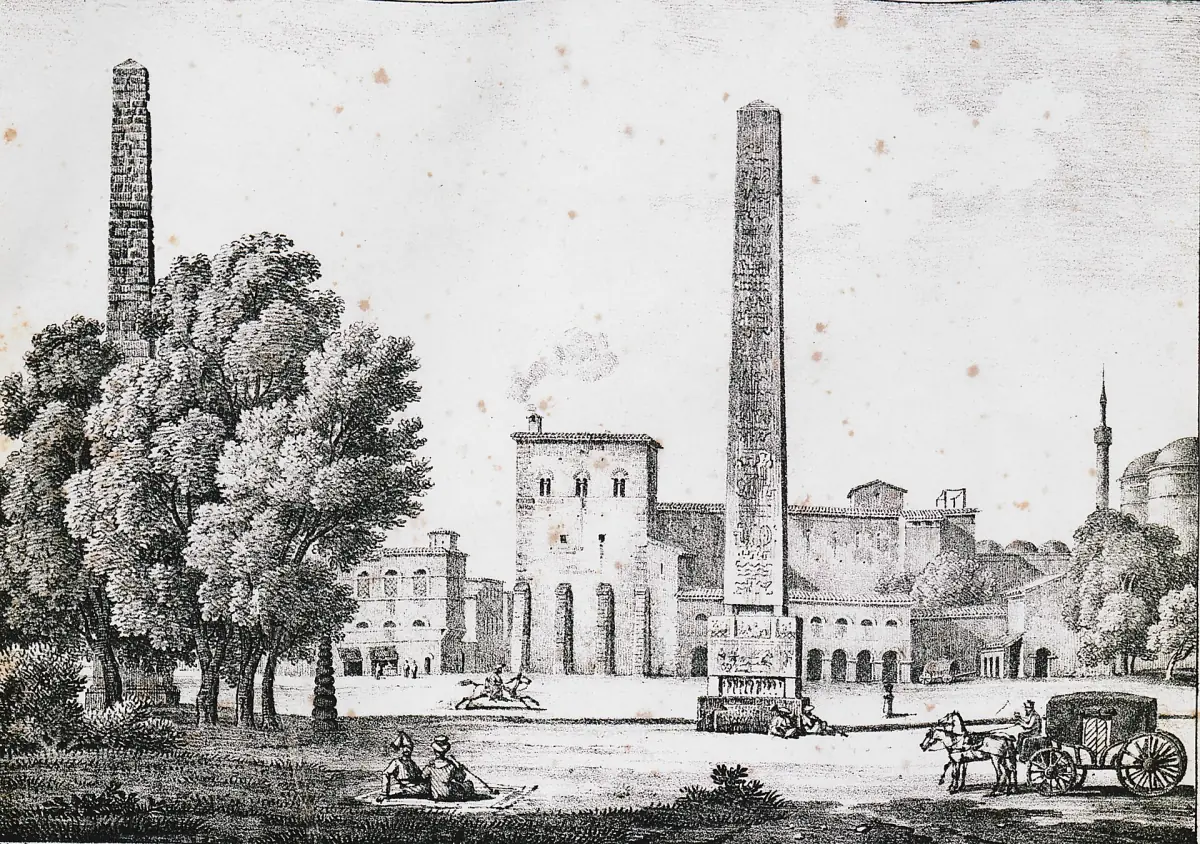
| Walled obelisk | A masonry obelisk, called Örme Dikilitaş in Turkish | Origin and building date vary by account |
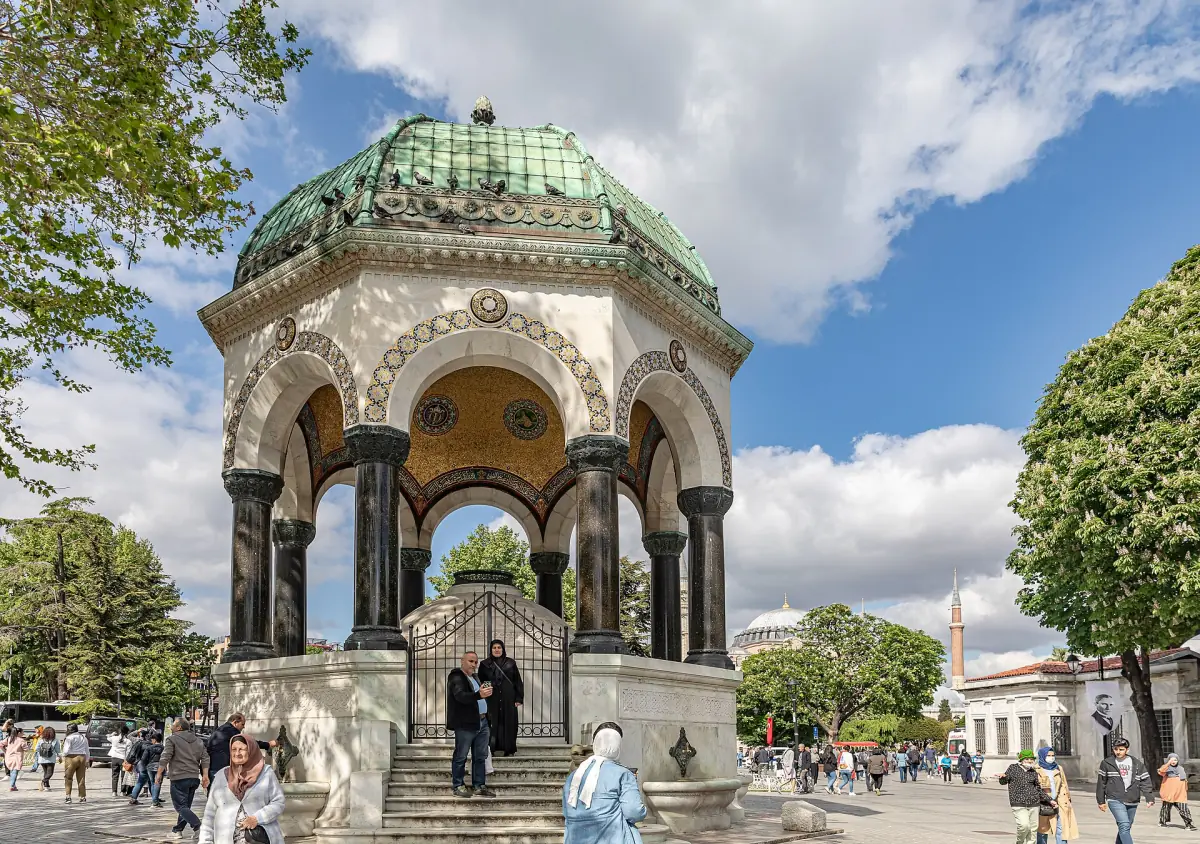
| German Fountain | A domed fountain at the north end of the square | Built 1900, inaugurated 27 January 1901 |
For most visitors, the Obelisk of Theodosius and the German Fountain are the two stops worth planning around. Give the Serpent Column and the walled obelisk a short look on the way.
The stories behind them
Four stops on the square.
The Obelisk of Theodosius
The obelisk came from Egypt, where it was first raised under Thutmose III at Karnak. It was set up on the Hippodrome in 390 under Theodosius I. Please do not touch the marble base or the hieroglyphs. Do not climb on the monument either.
The Serpent Column
The column comes from the Temple of Apollo at Delphi. It was brought to Constantinople and now stands on the square. Guides name different years for the move.
The walled obelisk
The masonry obelisk is the other survivor of the Hippodrome. Its origin and building date vary by account, so a guide may give you different versions.
The German Fountain
It stands at the northern end of the Hippodrome, opposite the tomb of Sultan Ahmed I. It recalls the visit of Kaiser Wilhelm II in 1898. The fountain was built in 1900 and inaugurated on 27 January 1901. It was made in Germany and shipped to Istanbul in parts. The mosaic dome is worth a look up close.
How to visit
The square is in the open and costs nothing. Access can be limited at times, so the paths may differ from a photo. Combine the stop with the Blue Mosque visiting hours, because the mosque closes around prayers.
From the square, the Blue Mosque is a few steps away, and the architecture of the Blue Mosque is easy to appreciate from here. For shopping nearby, see the Grand Bazaar. The Hagia Sophia and the Basilica Cistern, both close by, are covered in the Sultanahmet guide.
Common misunderstandings
Four things visitors sometimes mix up.
It is not a racetrack today
The ancient Hippodrome is part of a World Heritage site, but the square you walk across is not a fully preserved arena.
The obelisk is older than the city
The Egyptian obelisk was first raised under Thutmose III, long before it was set up here in 390. Do not describe it as a Roman work.
The fountain's dates
The German Fountain was built in 1900 and inaugurated on 27 January 1901. The year 1898 is the date of the imperial visit it recalls.
The opening hours
The square is open air, but access can be limited at times, for example around events. Treat it as open air, not as a guaranteed gate.
Tour guides are the best way to hear these stories in order. Our old city tours page shows which walks start on the square.
Key dates on the square
The dates you are most likely to hear on a tour.
| Date | Event |
|---|---|
| 390 | The Egyptian obelisk is set up under Theodosius I |
| Ottoman period | The place is known as At Meydanı |
| 1898 | Kaiser Wilhelm II visits Istanbul |
| 1900 | The German Fountain is built |
| 27 January 1901 | The fountain is inaugurated |
If you remember one thing, remember that the Hippodrome is a square with monuments, not a ruin you enter.
The Hippodrome: frequently asked questions
Is there an entrance fee for the Hippodrome?
No. The monuments are in the open and visiting is free. Access can be restricted at times, for example around events.
What can I still see of the Hippodrome?
The Obelisk of Theodosius, the Serpent Column and the walled obelisk. The German Fountain stands at the north end. The square is not a fully preserved racetrack.
Where does the obelisk come from?
From Egypt. It was first raised under Pharaoh Thutmose III at the Karnak temple and set up here in 390 under Theodosius I.
When was the German Fountain built?
It was built in 1900 and inaugurated on 27 January 1901. It commemorates Kaiser Wilhelm II's visit in 1898.
Can I touch the obelisk?
Please do not touch the marble base or the hieroglyphs, and do not damage the monument.
Is this an official website?
No. This is an independent travel guide with no link to the mosque or any government body.